Why Individualised Strength Training Is the Gold Standard for Osteopenia and Osteoporosis – Part 1
Why Individualised Strength Training Is the Gold Standard for Osteopenia and Osteoporosis – BODYSYSTEM – Part 2
F – Frequency
Aim for 2–3 sessions of progressive resistance training per week, with at least one rest day between sessions to allow bone and muscular recovery. Impact-loading activities (if appropriate) can be added on alternate days. Consistency over long periods is vital.
I — Intensity
Intensity is the most critical variable for osteogenesis. Research supports training at 80–85% of one-repetition maximum which is equivalent to a weight you can lift for approximately 5–8 repetitions with good technique. This level of load creates the mechanical strain required to stimulate bone remodelling through osteoblast activity. Low-intensity exercise (e.g., walking alone) does not provide sufficient osteogenic stimulus at the hip or spine.
T — Time (Duration)
Sessions of 30–60 minutes are appropriate. Quality of loading and exercise technique is more important than session length. Longer sessions do not necessarily produce greater bone adaptation and increase fatigue and injury risk.
T — Type
Exercises that load the spine and hip are most important given these are primary fracture sites. Evidence-supported exercises include:
- Deadlifts: loads the spine and hip under significant axial force.
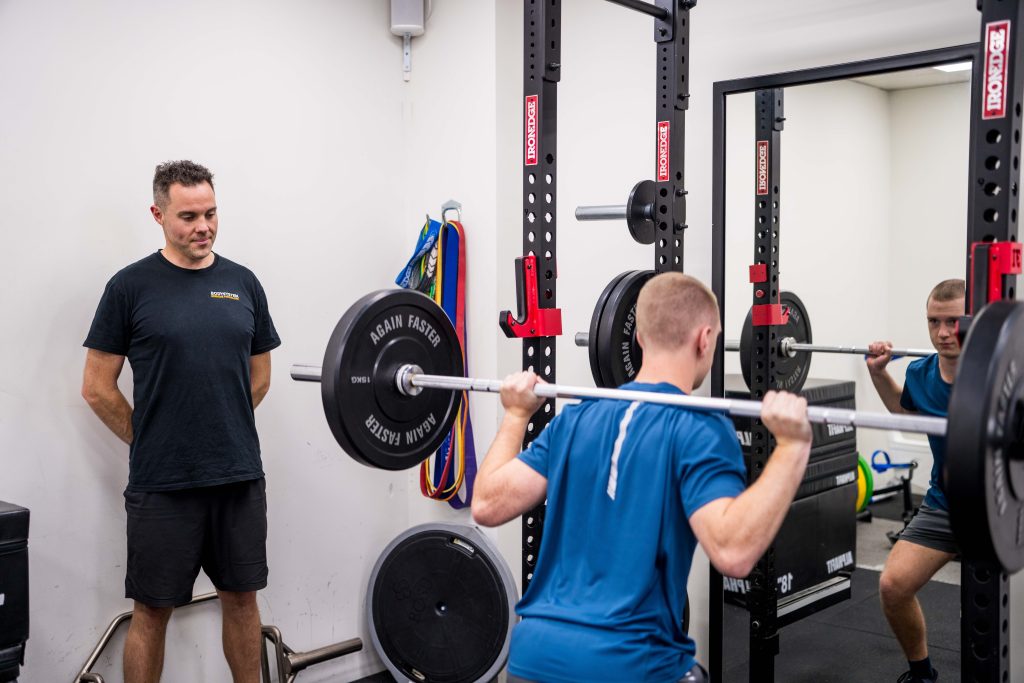
- Squats: loads the spine, hip, and lower limbs.
- Overhead press: loads the spine and upper limbs.
- Weighted step-ups: loads the hip and femoral neck.
- Jumping or impact exercises (where appropriate and safe): ground reaction forces stimulate the hip.
- Rows and pulling exercises: load the thoracic spine, important for postural muscles in kyphosis-prone individuals.
V — Volume
Begin with 1–3 sets of 5–8 repetitions per exercise, progressing over time to 4–5 sets. Total weekly volume should increase gradually as the individual adapts. More volume is not always better – quality, load, and safety take precedence.
P — Progression
Progressive safe overload is essential. Without progression, bone adaptation plateaus. Load should be incrementally increased as the individual’s strength improves. Progression should occur slowly and systematically, guided by the individual’s response, recovery capacity, and any musculoskeletal symptoms. Bone remodelling is a slow biological process. Unlike gaining muscle strength which can be observed within 4–8 weeks, significant BMD improvements typically emerge over much longer periods.
Musculoskeletal Considerations
People with osteopenia or osteoporosis frequently have co-existing musculoskeletal and health conditions that must be assessed and managed alongside bone health exercise. These often include:
Vertebral Fractures and Spinal Precautions
Approximately one-third of vertebral fractures in people with osteoporosis are discovered incidentally on imaging. Loaded spinal flexion is generally contraindicated. An AEP will identify these risks through pre-exercise assessment and modify the program accordingly.
Osteoarthritis and Joint Pathology
Co-existing hip or knee osteoarthritis requires care with exercise selection and load management. An AEP will select joint-friendly movement patterns, modify range of motion where required, and ensure that exercises targeting bone mineral density do not exacerbate joint pain.
Kyphosis and Postural Changes
Thoracic kyphosis (stooping posture) is common in individuals with vertebral fractures and longstanding osteoporosis. It is safe to still lift with higher intensities with thoracic kyphosis, but this must be very closely guided. Exercises targeting postural muscles are important components of a well-rounded program, reducing postural load on the spine and falls risk.
Balance and Falls Prevention
Because fall-related fractures are a primary concern, balance and proprioceptive training should be integrated alongside strength exercise.
Pelvic Floor Dysfunction
Pelvic floor health is important and frequently overlooked dimension of exercise prescription for osteoporosis, particularly postmenopausal women who may already have increased pelvic floor vulnerability.
Progressive resistance training, especially important bone loading compound lifts such as squats and deadlifts, generates increased intra-abdominal pressure. In individuals with pelvic floor dysfunction, high loads without appropriate technique and breath management can worsen symptoms. Load and exercise selection is modified where pelvic floor concerns are present, with referral to a pelvic floor physiotherapist as part of an integrated care approach.
Conclusion
The evidence is clear: individualised, progressive strength training is the most effective exercise intervention for improving bone mineral density, reducing fracture risk, and enhancing quality of life in people with osteopenia and osteoporosis. An Accredited Exercise Physiologist is the most appropriate professional to design and supervise this process. They can account for your bone density, fracture history, musculoskeletal health, comorbidity and overall wellbeing. At BODYSYSTEM our Accredited Exercise Physiologists can help you get started.
References
- Beck, B.R., Daly, R.M., Singh, M.A.F., & Taaffe, D.R. (2017). Exercise and Sports Science Australia (ESSA) position statement on exercise prescription for the prevention and management of osteoporosis. Journal of Science and Medicine in Sport, 20(5), 438–445. https://doi.org/10.1016/j.jsams.2016.10.001
- Beck, B.R., Weeks, B.K., Marques, E.A., et al. (2017). Hip and spine BMD is maintained in women with low bone mass following a novel effective high-intensity but low-volume resistance and impact-loading exercise program: LIFTMOR randomised controlled trial. Journal of Bone and Mineral Research, 32(10), 1986–1994. https://doi.org/10.1002/jbmr.3284
- Brooke-Wavell, K., Skelton, D.A., Barker, K.L., et al. (2022). Strong, steady and straight: UK consensus statement on physical activity and exercise for osteoporosis. British Journal of Sports Medicine, 56(15), 837–846. https://doi.org/10.1136/bjsports-2021-104634
Taylor Wilczynski
ESSA Accredited Exercise Physiologist