Hand Therapy Week – Carpal Tunnel Syndrome
This week is Hand Therapy Week (1st June to 7th June) and in this blog we would like to highlight a common hand and wrist condition known as Carpal Tunnel Syndrome.
What is Carpal Tunnel Syndrome?
Carpal Tunnel Syndrome (CTS) is one of the most common nerve conditions affecting the hand and wrist. It occurs when the median nerve, which travels underneath a strong wrist structure called the transverse carpal ligament, and through a narrow passage in the wrist called the carpal tunnel, becomes compressed or irritated. If any nerve is repeatedly compressed it can undergo a process known as demyelination which results in a reduced ability to transmit electrical impulse. This nerve controls sensation in the thumb, index finger, middle finger, and part of the ring finger, as well as some thumb muscles.
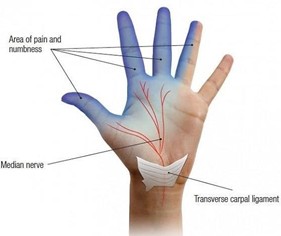
Figure 1. The thumb, index, middle and partial ring finger are areas of pain and numbness in carpal tunnel syndrome due to the median nerve pathway to these specific fingers. (Reproduced from Alsharif, Abdulazeez. (2017)
Who does Carpal Tunnel Syndrome effect?
CTS is a result of an increased carpal tunnel pressure on the median nerve it is often associated with risk factors that contribute to this. It is a common condition in pregnant women and workers who carry out repeated gripping and keyboard tasks such as office workers, tradespeople and drivers. Risk factors may include repetitive hand activities, prolonged wrist positions, vibration exposure, diabetes, arthritis, cysts, or medically related fluid retention.
What are some of the signs and symptoms?
Symptoms usually develop gradually and may include:
- Numbness or tingling in the thumb, index, and middle fingers
- Hand pain, especially at night, and potentially extending up the forearm
- Many people notice they wake at night and need to “shake out” their hand for relief.
- Weak grip strength or difficulty holding objects
- Visible atrophy of hand musculature
- Clumsiness when doing fine motor tasks
- A feeling of swelling in the fingers even when swelling is not visible
- Symptoms worsening during repetitive activities such as typing, driving, or using tools
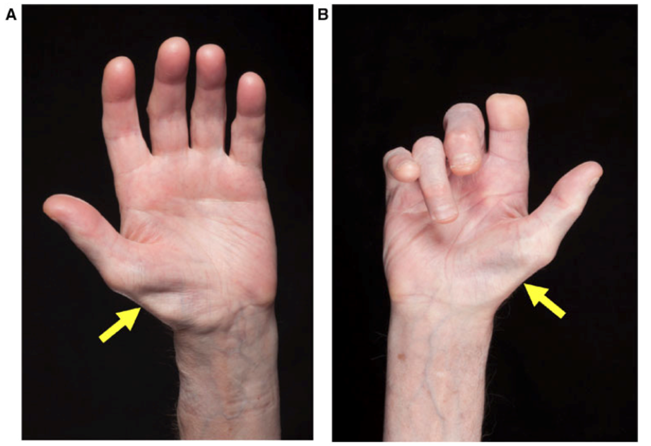
Figure 2. In chronic or severe cases of carpal tunnel syndrome a visible wastage of hand musculature is present. (Reproduced from Sadr, Amir & Misky, Adam & Akhavani, Mo. (2020) – This is in extreme cases (will not progress to this in most cases)
How do I know if it is Carpal Tunnel Syndrome?
A hand therapist can properly assess for suspected carpal tunnel syndrome. This usually will involve a detailed history of your symptoms and a physical examination that measures your hand sensation, grip and pinch strength, wrist and finger mobility and testing for nerve entrapment specifically at the wrist. In some chronic or severe cases, doctors may arrange nerve conduction studies or ultrasound imaging to confirm the diagnosis. It is also important that an examination also rule out other issues that might be related or even mimic CTS such as a nerve related issue at the neck, shoulder or elbow.
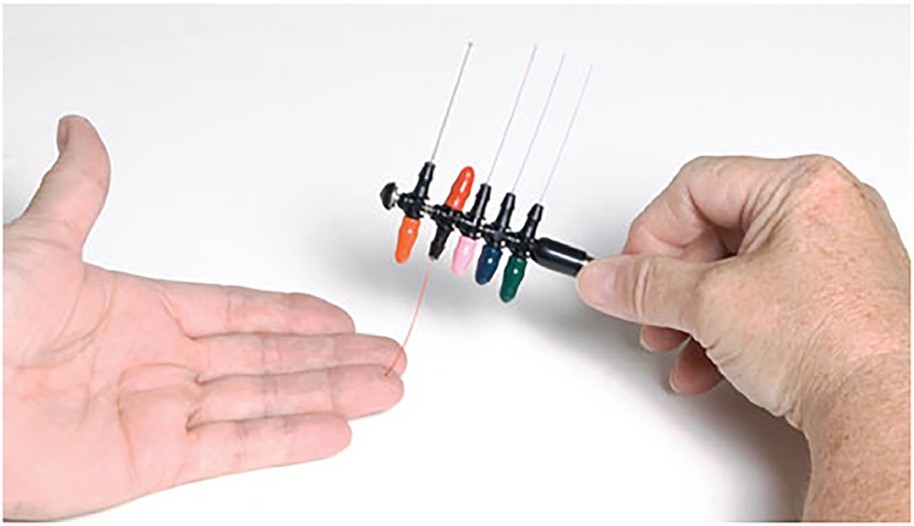
Figure 2. Measurement of finger sensation with a monofilament gauge. (Reproduced from Lothet E, Lacy A, Odom E (2024)
How do I manage Carpal Tunnel Syndrome?
Not all carpal tunnel syndrome conditions are treated the same way. A hand therapist can help identify the best management strategies for your particular condition. Some conditions are best addressed by dealing with underlying activities and work ergonomics. Manual and exercise therapy may improve soft tissue mobilisation and neural mobilisation. Bracing options may also be used to settle CTS by optimising wrist position to reduce neural compression. If the condition has contribution from other sources, such as a neck referred condition, then dealing with these will be an important part of long-term management.
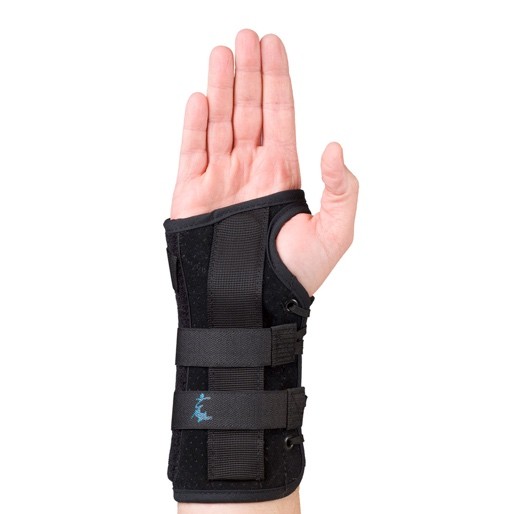
Figure 3. Wrist braces are commonly used to provide optimal carpal tunnel positions that reduce tunnel pressure
When is Further Treatment Needed?
If symptoms are severe, worsening, or associated with muscle wasting or constant numbness, medical review is important. Corticosteroid injections or surgery may be recommended in some cases. Carpal tunnel release surgery aims to reduce pressure on the median nerve and is generally successful.
Prognosis
Many people improve with early physiotherapy management and activity changes. Recovery is usually best when symptoms are identified and treated early before permanent nerve irritation develops.
References
- American Academy of Orthopaedic Surgeons. Management of Carpal Tunnel Syndrome Clinical Practice Guidelines.
- Mayo Clinic. Carpal Tunnel Syndrome Overview.
- Padua L, Coraci D, Erra C, et al. Carpal tunnel syndrome: clinical features, diagnosis, and management. Lancet Neurology. 2016;15(12):1273–1284.
- Australian Physiotherapy Association. Evidence-based physiotherapy management resources for upper limb conditions.
- Alsharif, Abdulazeez. (2017). Risk Factors, Diagnosis, and Treatments for Carpal Tunnel Syndrome A Review. 233-243.)
- Sadr, Amir & Misky, Adam & Akhavani, Mo. (2020). What happens if you ignore carpal tunnel syndrome?. QJM : monthly journal of the Association of Physicians. 114. 10.1093/qjmed/hcaa235.)
- Lothet E, Lacy A, Odom E, The Ten Test and Sensory Evaluation of Hand and Finger Injuries in the Emergency Department, Journal of Emergency Medicine, 2024; 71, 54-59

Fran Black
Accredited Hand Therapist
(Aus Hand Therapy Association)

Paul Tho
Physiotherapist