If you have been diagnosed with osteopenia or osteoporosis, you may have been told to "do some strength exercise", but not all strength exercise is created equal when it comes to bone health. I want to share the evidence behind why individualised, progressive strength training is the most effective and safest intervention to improve bone mineral density (BMD), reduce fracture risk, and protect your long-term health.
Understanding Osteopenia and Osteoporosis
Osteoporosis is characterised by reduced bone mineral density and deterioration of bone microarchitecture, leading to increased skeletal fragility and fracture risk. Osteopenia represents a transitional state of lower-than-normal BMD that, if untreated, can progress to osteoporosis. In Australia, osteoporosis affects approximately 1.2 million people and osteopenia a further 6.3 million, with postmenopausal women and older adults disproportionately affected. The good news, bone is living tissue and mechanical loading through targeted exercise can stimulate bone remodelling and meaningfully improve BMD at clinically relevant sites.
What the Research Says
ESSA Position Statement
Exercise and Sport Science Australia (ESSA) has published an evidence-based position statement confirming that strength exercise is a key intervention for bone health across the lifespan. ESSA endorses progressive resistance training (PRT) and impact-loading exercise as primary modes for stimulating bone formation.
British Journal of Sports Medicine — Position Statement
A landmark consensus statement published in the British Journal of Sports Medicine provided updated recommendations for exercise and bone health, concluding that:
- Progressive resistance training targeting the hip and spine is the most effective exercise modality for improving BMD in adults with osteopenia/osteoporosis.
- Higher-intensity loading, when safely applied, produces greater osteogenic stimulus than low-intensity exercise.
- Individualisation is essential: age, fracture risk, comorbidities, medications, and physical capacity must all be considered.
- Exercise reduces falls risk by improving muscle strength, balance, and coordination. A critical secondary benefit beyond BMD.
The Work of Professor Belinda Beck: LIFTMOR and Beyond
Professor Belinda Beck from Griffith University is one of the world’s leading academics on exercise and bone health. Her team’s research has fundamentally shifted clinical thinking; bone needs to be meaningfully loaded to respond and adapt. The LIFTMOR Trial was a landmark randomised controlled trial demonstrating that high-intensity resistance and impact training significantly improved BMD at the lumbar spine and femoral neck in postmenopausal women with low bone mass, compared to a low-intensity program.
Key findings from the LIFTMOR trial and subsequent work include:
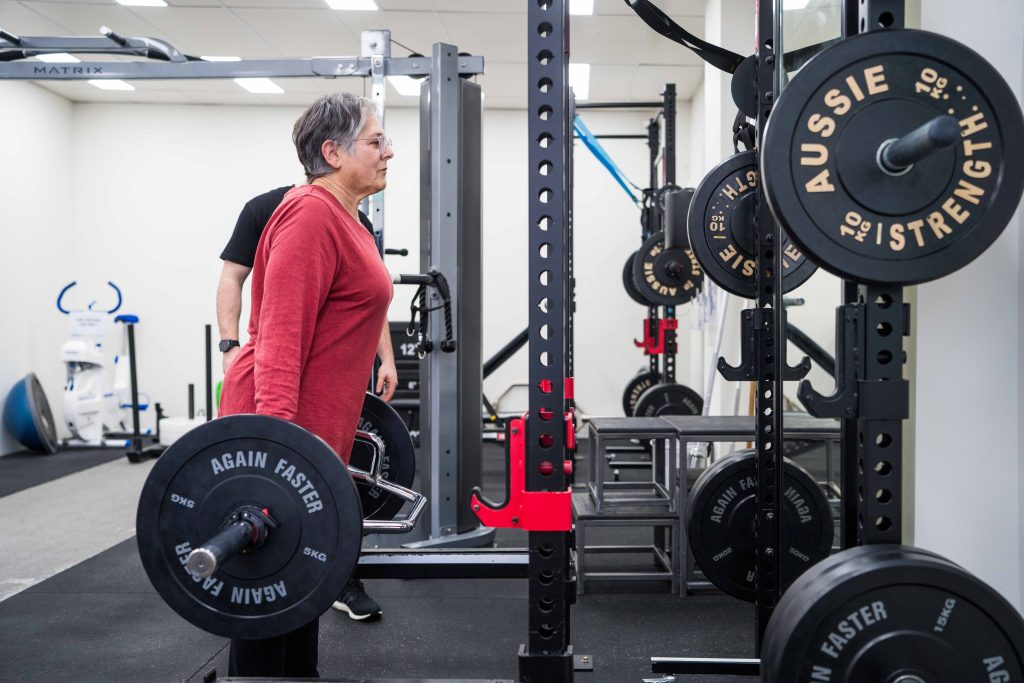
- Supervised high-intensity resistance and impact training (5 repetition maximum loads, deadlifts, overhead press, back squat, jumping chin-up, drop jumps) produced significant BMD improvements.
- The program was safe and well tolerated under qualified supervision, with no serious adverse events related to exercise.
- Improvements in functional performance (strength, balance) were observed alongside BMD gains.
- The LIFTMOR-M extension more recently has confirmed similar benefits in comparatively aged
Part 2 – Main Principles for Strength Exercise and Bone Mineral Density
https://bodysystem.com.au/main-principles-for-strength-exercise-and-bone-mineral-density/

Taylor Wilczynski
ESSA Accredited Exercise Physiologist